The Price of Permanence: Separating Genuine Investment Pieces From Costly Illusions
There is a particular kind of buyer's remorse that arrives not at the register but months later, when a garment purchased with great deliberation — and considerable expense — reveals itself to be a mistake. The cashmere sweater that pills aggressively after a single season. The leather bag whose hardware tarnishes within a year. The silk blouse that loses its structure after two careful hand-washes. Each of these is an expensive item. None of them is an investment.
The distinction matters enormously, and it is being obscured at an accelerating rate.
The ascendancy of 'quiet luxury' as a cultural aesthetic — that particular brand of understated, logo-free, conspicuously expensive dressing that has dominated style conversations from Succession's costume department to the streets of Manhattan's Upper East Side — has produced a market condition worth examining critically. The vocabulary of investment, permanence, and heirloom quality is now applied so broadly that it has lost much of its meaning. Expensive has become a synonym for enduring. It is not.
The Investment Dressing Myth
The investment dressing framework, as conventionally presented, rests on a seductive logic: spend significantly more on fewer, better pieces, and you will ultimately spend less. Quality over quantity. Cost-per-wear as the governing metric. It is a compelling argument, and when applied with genuine discernment, it holds.
The problem is that 'investment' has become a marketing category rather than an objective designation. Brands at every tier of the market now position their products using the language of longevity and considered value. A $400 T-shirt from a minimalist label is marketed as a foundational piece. A $900 sneaker is positioned as a design object. A $1,200 tote bag is described as a companion for life.
Some of these claims are legitimate. Many are not. And the consumer — confronted with sophisticated branding, aspirational imagery, and the social pressure of a cultural moment that equates expensive taste with good taste — is left without reliable tools for evaluation.
This is where a concrete framework becomes essential.
Criterion One: Craftsmanship You Can Verify
The most reliable indicator of genuine investment value is craftsmanship that can be assessed directly, without reference to price tag or brand reputation. This requires developing a working knowledge of what quality construction actually looks like — and feels like — across different categories.
In tailored clothing, this means examining seam allowances (generous allowances indicate a garment built to be altered and maintained over time), stitch density, pattern matching at seams, and the quality of interfacing and lining. A well-constructed blazer reveals its quality in the way the collar rolls, the way the chest lies flat without assistance, the way the fabric drapes under its own weight.
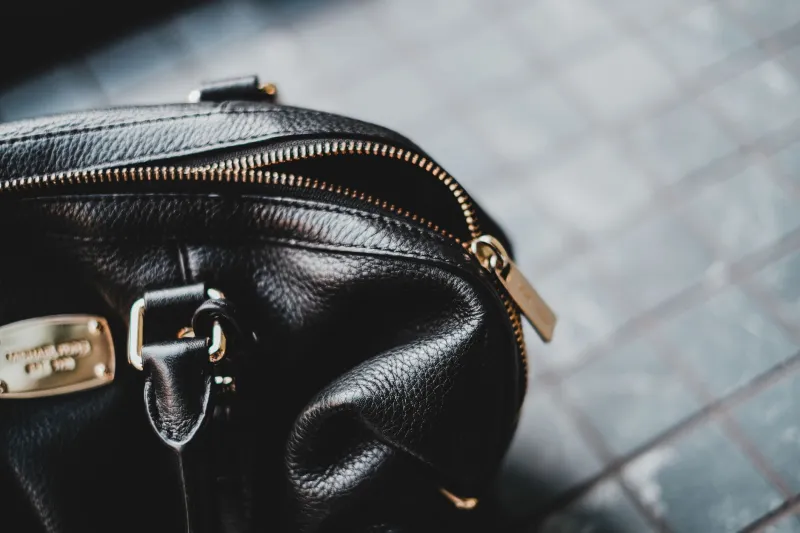
In leather goods, construction quality is visible in the consistency of stitching, the weight and suppleness of the leather itself, the solidity of hardware, and the finishing of interior surfaces. Edge paint applied unevenly, hardware that wobbles, linings that are glued rather than stitched — these are signals that price and quality have been decoupled.
In knitwear, gauge, fiber content, and construction method are the relevant variables. A loosely knit cashmere sweater will pill regardless of the fiber's quality. A tightly constructed piece in a slightly lower grade of cashmere will often outperform it in longevity.
The discipline here is simple but demanding: learn to evaluate the object itself, not its provenance.
Criterion Two: Versatility Across Real Life
An investment piece must earn its cost through frequency of use, which means it must be genuinely versatile across the actual contexts of the buyer's life — not the idealized version of that life.
This is where aspirational purchasing most frequently fails. A beautifully constructed evening coat is an excellent investment for someone whose social calendar regularly includes formal events. For someone who attends one formal occasion per year, it is a beautiful object that happens to live in a closet. The craftsmanship is real; the investment value is not.
Before committing to a high-cost item, the relevant question is not 'Is this well made?' but rather 'Will I reach for this repeatedly, across multiple contexts, over the next ten years?' That question requires honest self-knowledge about lifestyle, not inspiration about the lifestyle one might like to have.
The most reliably valuable investment pieces tend to be those that function across a broad range of formality levels, that work across multiple seasons with minor layering adjustments, and that integrate naturally with the majority of what is already owned.
Criterion Three: Longevity Beyond Trend
Perhaps the most nuanced criterion is temporal: will this piece remain relevant — and wearable — beyond the current cultural moment?
This is a genuinely difficult question because quiet luxury, like every aesthetic movement, contains within it the seeds of its own obsolescence. The very qualities that define it — restraint, understatement, the absence of obvious trend signals — make it feel timeless. But 'timeless' is not a permanent condition. It is a designation that can only be confirmed retrospectively.
The more reliable approach is to distinguish between pieces that are stylistically neutral and pieces that are merely trending toward neutrality. A well-proportioned, unlined wool trouser in a classic charcoal or navy is genuinely neutral — it has been worn by design-conscious people for decades and will continue to be. A wide-leg trouser in an unusual cut that happens to be currently fashionable is a trend piece in neutral clothing. The distinction requires attention to proportion and construction details, not just color.
The Honest Accounting
There is a final, less comfortable dimension to this conversation: the role of emotional reasoning in expensive purchases.
The desire for permanence — for objects that will outlast the moment and accumulate meaning over time — is a genuine and admirable impulse. It reflects a considered relationship with material goods that stands in productive opposition to disposable consumption. But that desire can be exploited, and frequently is. The aspiration to own heirloom-quality pieces can be redirected, through sophisticated marketing, toward merely expensive ones.
The antidote is not cynicism about quality or cost. Genuinely excellent objects exist at premium price points, and they are worth seeking out. The antidote is rigor: the willingness to evaluate each potential acquisition against concrete, verifiable criteria rather than narrative and aspiration.
Craftsmanship you can assess directly. Versatility within your actual life. Longevity beyond the current aesthetic moment. These are the standards that separate a piece worth the investment from an expensive mistake — regardless of what the label says, what the brand story promises, or what a particular cultural moment has decided constitutes good taste.
Permanence is earned. It cannot be purchased on faith.