Dress With Intent: How Color Psychology Can Rewire Your Wardrobe and Your Confidence
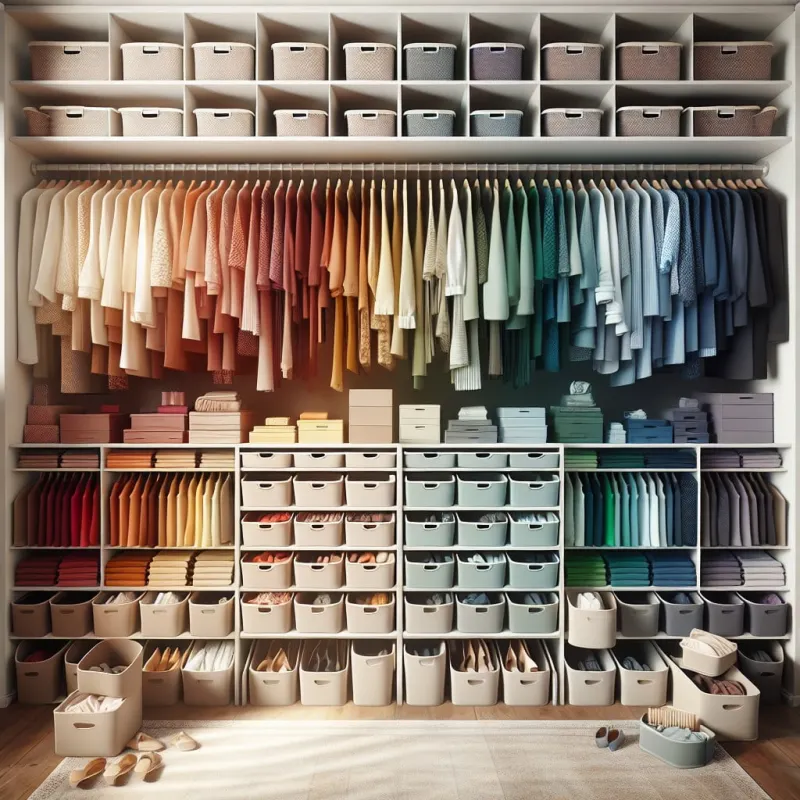
Photo: organized color coordinated closet wardrobe neutral tones fashion styling, via thismakesthat.com
Most people approach their closet the way they approach a vending machine — scanning for something familiar, something safe, something that simply works. But what if the colors you choose each morning were less about habit and more about intention? What if your wardrobe could function as a curated toolkit, one designed to calibrate your confidence before you ever leave the house?
At Studio Styles, we believe that personal style is never arbitrary. It is the visible expression of an interior aesthetic — and nowhere is that more apparent than in the strategic use of color.
The Science Behind the Spectrum
Color psychology is a well-established field rooted in both neuroscience and behavioral research. Studies conducted at institutions such as the University of Rochester and the Color Research & Application journal have demonstrated that color stimulates distinct neurological and emotional responses. These responses are not purely cultural; many are physiological, meaning your nervous system reacts to hue before your conscious mind has formed an opinion.
Navy blue, for instance, triggers associations with authority and calm reliability — which is precisely why it has dominated boardrooms and courtrooms for decades. Red activates the sympathetic nervous system, increasing heart rate and projecting assertiveness. Soft sage and dusty rose lower cortisol levels, communicating approachability and ease. These are not aesthetic opinions. They are measurable physiological events.
For the design-conscious dresser, this data is not merely interesting — it is actionable.
Auditing What You Already Own
Before building a new color strategy, it is worth examining what your current closet communicates. Pull every item out and group pieces by color family. What you discover will likely tell you something honest about your default emotional state and the narrative you have been unconsciously projecting.
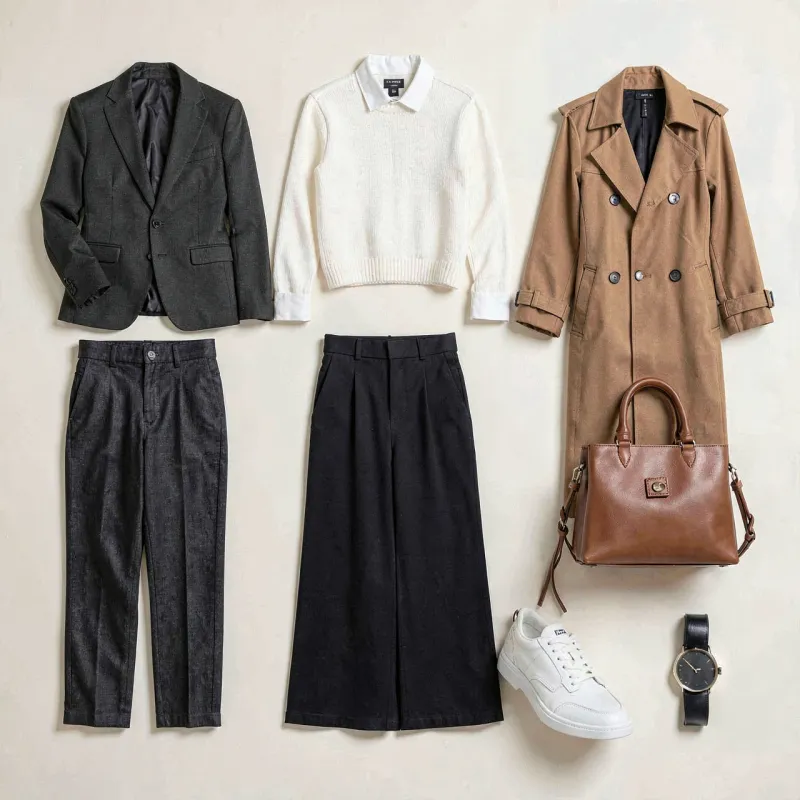
A closet dominated by neutrals — black, grey, camel, ivory — often signals a desire for control and versatility, but can also indicate a reluctance to make a definitive aesthetic statement. A wardrobe saturated with jewel tones suggests someone drawn to depth and drama. A predominance of whites and light blues points toward a preference for clarity and openness.
Neither pattern is inherently right or wrong. The goal of this audit is awareness, not judgment. Once you understand the story your closet is currently telling, you can begin to edit it with purpose.
Building Your Personal Color Architecture
A well-structured wardrobe operates much like a well-designed interior space. It requires a foundation, a palette, and intentional accents. Here is a three-tier framework to consider:
The Foundation Layer consists of your two or three anchor neutrals. These are the pieces you reach for most often — trousers, blazers, outerwear, and essential knitwear. Choose neutrals that complement your natural undertones. Warm-toned individuals tend to thrive in camel, warm white, and chocolate brown. Cool-toned individuals are typically better served by true black, charcoal, and slate grey.
The Palette Layer introduces your signature colors — typically two to four hues that appear consistently throughout your wardrobe and reinforce your personal aesthetic. This is where psychology becomes personal. If you are building confidence in professional environments, consider incorporating deep teal or burgundy, both of which communicate authority without the aggression sometimes associated with red. If you are cultivating a creative identity, structured pops of terracotta or cobalt can signal originality while remaining sophisticated.
The Accent Layer is reserved for seasonal trends and expressive pieces. These are the items you enjoy without over-investing in — a printed scarf, a statement shoe in an unexpected color, a transitional jacket in a micro-trend hue. This layer keeps your wardrobe feeling current without compromising the integrity of your foundation.
Color and the Professional Context
American workplace culture has shifted considerably in recent years, with dress codes relaxing across many industries. Yet color psychology remains as relevant as ever in professional settings — perhaps more so, given the nuance now required to dress appropriately across contexts ranging from in-person client meetings to video calls.
For video presentations and remote work, color becomes especially critical. The camera compresses detail, meaning texture and cut matter less than hue. Wearing a medium-value color — think dusty blue, warm olive, or a muted plum — reads as polished and intentional on screen without the harshness of stark black or the visual noise of bright white.
For in-person presentations or high-stakes meetings, consider the psychological impression you wish to make. A structured blazer in midnight navy communicates competence and stability. Adding a single accent — a silk blouse in warm amber, a pocket square in sage — introduces dimension without undermining authority.
The Emotional Wardrobe: Dressing for How You Want to Feel
Beyond external perception, color has a powerful effect on your own internal state. This concept, sometimes referred to as enclothed cognition, was explored in research published in the Journal of Experimental Social Psychology, which found that the symbolic meaning of clothing directly influences the wearer's psychological processes.
In practical terms, this means that wearing a color associated with confidence — even on a day when you do not feel particularly confident — can begin to shift your internal experience. It is not performance; it is priming. You are giving your nervous system a cue before the day has had a chance to set its own tone.
Designate colors in your wardrobe for specific emotional intentions. Perhaps a structured rust-orange dress becomes your armor for difficult conversations. Perhaps a soft, heathered lavender sweater becomes your default for creative work days when you want to feel open and generative. These associations, once established, become remarkably effective.
A Final Note on Restraint
The most sophisticated approach to color is not the most colorful one. Restraint, in both interior design and personal style, is a mark of confidence. A tightly edited palette — executed with consistency and intention — communicates far more than a wardrobe that chases every seasonal trend.
Know your hues. Understand what they do for you and to you. Then build accordingly. The result will be a closet that functions not as a collection of clothes, but as a curated system — one designed to support the person you are working to become.