The Long Game: A Designer's Framework for Choosing Investment Pieces Over Trend Fatigue
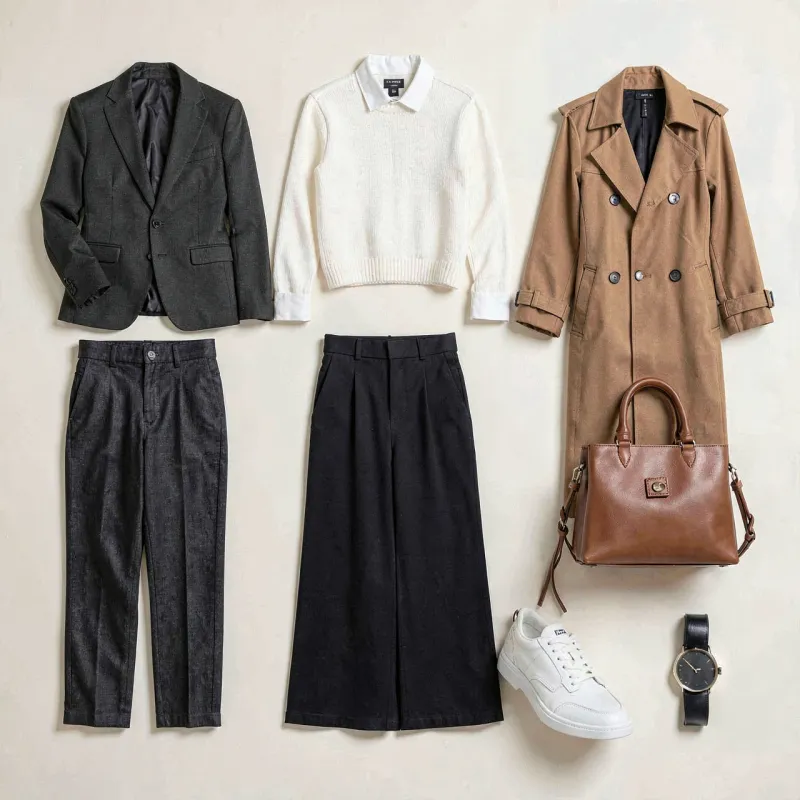
Photo: luxury investment wardrobe classic tailored clothing pieces flat lay neutral tones, via cdn.shopify.com
The fashion industry moves faster than it ever has. What arrives on the runway in February is rendered obsolete by October. What trends on social media on a Tuesday has been replaced by Friday. The average American consumer purchased 68 garments in 2023, according to data from the American Apparel & Footwear Association — a figure that reflects not personal style, but participation in a system designed to manufacture desire on a rolling basis.
For the design-conscious individual, this pace is not liberating. It is exhausting. And it is, ultimately, antithetical to the kind of intentional aesthetic that defines genuinely elevated personal style.
This is not an argument against fashion. It is an argument for strategy.
Why the Investment Versus Trend Distinction Matters
The tension between investment dressing and trend participation is not a new conversation, but it has gained renewed urgency in the context of both sustainability and financial intentionality. Americans are increasingly aware of the environmental cost of fast fashion, while simultaneously facing economic pressures that make thoughtless spending feel genuinely irresponsible.
The good news is that these concerns are not in conflict with looking extraordinary. In fact, the most consistently well-dressed people — those whose style reads as considered rather than reactive — are almost always those who have made fewer, more deliberate purchasing decisions.
The framework that follows is not about spending more. It is about spending with precision.
The Three Criteria for a True Investment Piece
Not every expensive garment is a genuine investment, and not every affordable one is disposable. Price is a factor, but it is not the defining criterion. Before committing to any piece you intend to wear for five years or more, evaluate it against these three standards:
1. Construction and Material Integrity An investment piece must be built to last. This means natural or high-performance fibers — merino wool, full-grain leather, silk, heavyweight cotton — and construction details that signal quality: finished seams, reinforced stress points, consistent stitching. Hold the garment up to light. Stretch a seam gently. Examine the lining. These are not precious gestures; they are due diligence.
American consumers have been conditioned by fast fashion to accept a certain level of mediocrity in construction. Recalibrating that expectation is essential before making meaningful purchases. A cashmere sweater from a heritage brand and a cashmere-blend sweater from a volume retailer are not the same product, regardless of surface similarity.
2. Silhouette Longevity Trends operate at the level of detail — a lapel width, a trouser break, a specific heel height. Classic silhouettes operate at the level of proportion, and proportion is far more stable over time. A straight-leg trouser, a single-breasted blazer with a natural shoulder, a trench coat with a belted waist — these forms have remained relevant across multiple decades because they are rooted in human proportion rather than seasonal novelty.
When evaluating a potential investment piece, ask yourself: Would this have looked appropriate ten years ago? Will it likely look appropriate ten years from now? If the answer is yes to both, the silhouette passes the test.
3. Versatility Within Your Existing Wardrobe An investment piece earns its value through frequency of wear. A beautifully constructed garment worn twice a year is an expensive indulgence. The same piece worn forty times a year is a genuine investment. Before purchasing, identify at least five distinct combinations it creates within your current wardrobe. If you cannot articulate those combinations immediately, the piece may not belong in your rotation — regardless of its quality.
Where Trends Belong in a Considered Wardrobe
This framework does not require the elimination of trend participation. Trends serve a legitimate function: they keep style feeling alive, current, and personally expressive. The key is engaging with them at the appropriate financial level.
Consider the concept of a trend budget — a defined portion of your annual clothing spend allocated specifically to seasonal, lower-commitment pieces. This might mean enjoying a particular color story through an affordable accessory rather than a full wardrobe overhaul. It might mean exploring a silhouette trend through a mid-market purchase rather than a luxury commitment. The trend is experienced; the financial exposure is contained.
This approach requires a clear distinction between two categories: the wardrobe core, which is built slowly and maintained rigorously, and the wardrobe periphery, which is refreshed seasonally and held loosely. Conflating these two categories — spending investment-level dollars on trend-driven pieces — is among the most common and costly style mistakes.
The Categories Most Worth the Splurge
While individual style varies, certain categories consistently reward elevated investment across nearly every wardrobe:
- Outerwear — A well-constructed coat is worn daily for months and seen by everyone who encounters you. The cost-per-wear mathematics on quality outerwear are among the most favorable in fashion.
- Footwear — Shoes bear the literal weight of daily use. Quality construction extends lifespan exponentially, and classic silhouettes in quality leather or suede remain relevant across years.
- Tailoring — A blazer or trouser that fits with precision communicates authority and intention in a way that no amount of styling can replicate. Fit is, ultimately, the most powerful element in any outfit.
- Foundation knitwear — A heavyweight merino crewneck or a well-made cashmere turtleneck will outlast ten iterations of its fast-fashion equivalent.
Reframing the Cost-Per-Wear Calculation
One of the most useful mental frameworks in investment dressing is cost-per-wear analysis. Divide the purchase price of any garment by the number of times you realistically expect to wear it over its lifespan. A $400 blazer worn 150 times over five years costs $2.67 per wear. A $60 trend blazer worn eight times before it falls apart costs $7.50 per wear.
This reframe is not about justifying large purchases. It is about making the true economics of a decision visible before you make it.
A Wardrobe Built to Last
The most enduring personal styles are not built in a single season. They are assembled over years, through deliberate acquisitions, thoughtful edits, and a growing understanding of what genuinely serves the life being lived. This is, at its core, a design philosophy — the same one that guides the best interior spaces, the most compelling creative work, and the most considered lives.
Build slowly. Choose well. Hold the line on quality. The wardrobe that results will not look like anyone else's — and that, ultimately, is the point.