Signature by Design: How the Creative Uniform Became a Statement of Intent

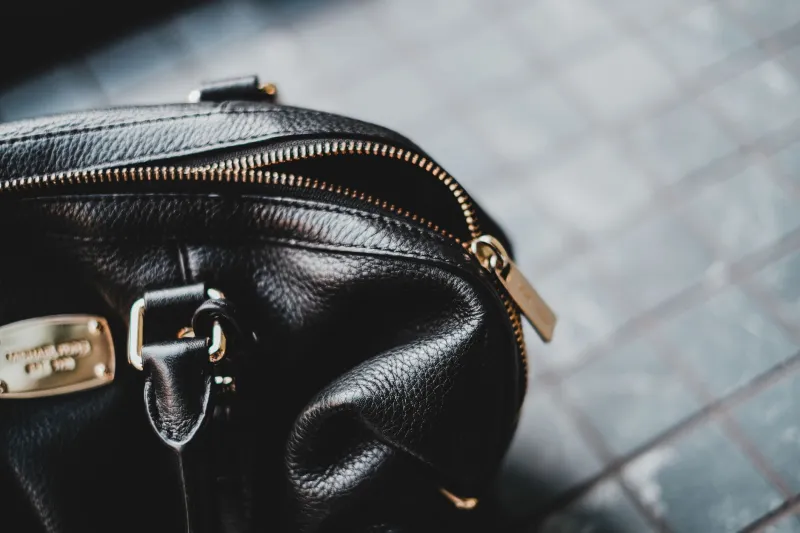
Photo by Photo by Vitaly Gariev on Unsplash on Unsplash
Somewhere between the Instagram flat lay and the runway spectacle, a quieter revolution in personal style has been taking shape. Designers, architects, directors, and technologists—people whose professional lives depend on creative output—have been arriving at a counterintuitive conclusion: that the most powerful personal style statement available to them is not variety, but consistency.
The creative uniform, once associated primarily with eccentric genius or deliberate eccentricity, has become something more nuanced and more intentional. It is, in its most sophisticated form, a design decision applied to the self—a recognition that how one presents to the world is itself a form of creative practice, and that constraints, properly chosen, generate clarity rather than limitation.
The Cognitive Economy of Consistency
The conversation around decision fatigue has become sufficiently mainstream to risk cliché, yet its relevance to personal style remains underexplored. The argument is straightforward: every decision made depletes a finite cognitive resource, and creative professionals—whose work demands sustained imaginative engagement—have more to lose from that depletion than most.
When a graphic designer removes the daily question of what to wear by defaulting to a considered formula—black trousers, a white or black top, clean leather sneakers—she is not surrendering her identity. She is protecting her creative bandwidth for the work that actually demands it. The uniform becomes, in this reading, a form of cognitive infrastructure.
This is not laziness dressed in philosophical language. It is a genuine optimization, and the results are visible in the professional output of those who practice it most deliberately. The mental space previously occupied by wardrobe deliberation is redistributed toward the problems that matter most.
The Architects of Repetition
The creative uniform has distinguished precedents. Karl Lagerfeld's uniform of dark suits, fingerless gloves, and powdered ponytail was so rigorously maintained that it became inseparable from his professional identity. Jony Ive's years at Apple were marked by a consistent rotation of fitted black turtlenecks and neutral trousers that echoed the product philosophy he was applying to hardware. In American film, directors from David Fincher to Sofia Coppola have cultivated signature looks so consistent that they function almost as professional logos.
What unites these figures is not an absence of taste but a surfeit of it. The decision to adopt a uniform is, paradoxically, one of the most considered style choices a person can make. It requires knowing oneself well enough to identify the silhouettes, fabrics, and tones that function as authentic expressions of identity—and then having the discipline to resist the cultural pressure toward novelty.
Among a younger generation of creative professionals, the uniform has taken on slightly different forms. In Brooklyn design studios and San Francisco tech firms, the signature look tends toward elevated basics: a well-constructed Japanese selvedge denim, a single brand of white T-shirt purchased in multiples, a minimal leather boot worn through every season. The vocabulary differs from Lagerfeld's tailoring, but the underlying logic is identical.
Constraint as a Creative Instrument
The design world has long understood that constraint is not the enemy of creativity—it is frequently its most productive condition. A brief with clear parameters produces more innovative solutions than an open-ended invitation. A limited color palette generates more cohesive work than an unrestricted spectrum. The same principle, applied to personal style, yields similarly clarifying results.
When a creative professional commits to a specific silhouette—say, a wide-leg trouser with a tucked, tailored top—every subsequent purchasing decision is filtered through that framework. Does this piece serve the established formula? Does it add genuine value, or merely novelty? The uniform becomes a decision-making architecture that makes the closet function with the same disciplined intentionality applied to a well-curated portfolio.
This is the point at which the creative uniform transcends personal style and becomes something closer to design methodology. The dresser is no longer reacting to trends or occasions—she is working within a self-imposed system that demands both rigor and creativity within its boundaries.
The Question of Expression
The most common objection to the creative uniform is that it suppresses self-expression. If clothing is a language, does wearing the same thing every day not reduce that language to a single repeated word?
The counterargument is compelling: expression does not require variety. A writer who returns to the same themes across a body of work is not considered limited—she is considered to have a voice. A painter who works consistently within a particular formal vocabulary is not seen as repetitive—she is recognized as having developed a style. The creative uniform operates on the same logic. The consistency itself becomes the statement.
Furthermore, within the uniform's framework, extraordinary subtlety becomes possible. The person who wears exclusively navy and white develops a finely calibrated sensitivity to the differences between a French navy and a midnight navy, between a crisp poplin and a soft jersey. These distinctions, invisible to someone rotating through dozens of colors and fabrics, become the rich vocabulary of a practiced eye.
Building a Signature Look With Intention
For those drawn to the creative uniform as a practice, the process of developing one is itself an exercise in self-knowledge. It begins not with a shopping list but with an honest audit of what one actually reaches for—not what one intends to wear, but what one consistently chooses.
Patterns emerge quickly. A preference for high waists over low. An instinct toward dark tones in autumn and pale ones in summer. A recurring attachment to a particular collar shape or hem length. These are not accidents—they are data points that, assembled honestly, reveal the outline of a genuine personal aesthetic.
From that outline, a signature look can be constructed: a formula flexible enough to accommodate occasion and season, but consistent enough to function as a recognizable visual identity. The goal is not rigidity but coherence—the sense that every outfit, regardless of context, could only have been assembled by the same person.
In a culture saturated with visual noise and trend cycles that compress from annual to monthly to weekly, that coherence is not a limitation. It is a form of authority.