Behind the Lens, Inside the Closet: What Fashion Photographers' Personal Style Teaches Us About Dressing Well
There is a particular irony embedded in the world of fashion photography. The individuals most responsible for constructing and communicating fashion's most aspirational images—the photographers who spend twelve-hour days on set making other people look extraordinary—are frequently among the most quietly, almost defiantly, understated dressers in any room. Their wardrobes do not announce themselves. They do not chase the season's dominant silhouette or rotate through statement pieces with the frequency their proximity to the industry might suggest. Instead, they wear, with remarkable consistency, a version of the same considered uniform: well-cut basics, unexpected material choices, and a studied indifference to anything that will not survive the next five years intact.
This is not coincidence. It is, in fact, the logical conclusion of spending one's professional life studying what actually works.
The Educated Eye and the Edited Closet
Fashion photographers occupy a distinctive vantage point in the style ecosystem. Unlike editors, whose role is partly aspirational and partly commercial, or stylists, who dress others for a living, photographers are fundamentally observers. Their job is to identify and capture what reads as compelling, what communicates quality, and what endures beyond the frame. Over time, that professional discipline tends to migrate into their personal choices.
The pattern is consistent across the industry. Working photographers—those shooting editorial spreads for major American publications, campaign work for heritage brands, and portrait sessions for cultural figures—tend to gravitate toward a wardrobe built on what might be described as structural clarity. Pieces with clean, unambiguous lines. Fabrics that carry weight and texture without demanding attention. A color palette that functions as a neutral ground rather than a statement in itself.
This is not the wardrobe of someone who has lost interest in fashion. It is the wardrobe of someone who has thought about it more carefully than most.
Why Proximity to Fashion Produces Distance from Trends
The fashion industry operates on a cycle of deliberate obsolescence. Trends are not discovered; they are engineered, amplified, and retired on a schedule that serves commercial imperatives more than aesthetic ones. Photographers who work within this system develop, almost inevitably, a certain immunity to its urgencies. They have seen too many it pieces arrive and recede to invest heavily in any single one.
What emerges instead is a wardrobe philosophy that prioritizes longevity of relevance over immediacy of impact. The photographers who have worked the longest and most consistently in the field tend to dress in ways that would be equally at home in a 2015 profile photograph and a 2025 one. This is not stagnation—it is the mastery of a specific kind of timelessness.
In conversations with working photographers across New York, Los Angeles, and Chicago, several recurring themes emerge when the subject turns to their own wardrobes.
The Texture Principle
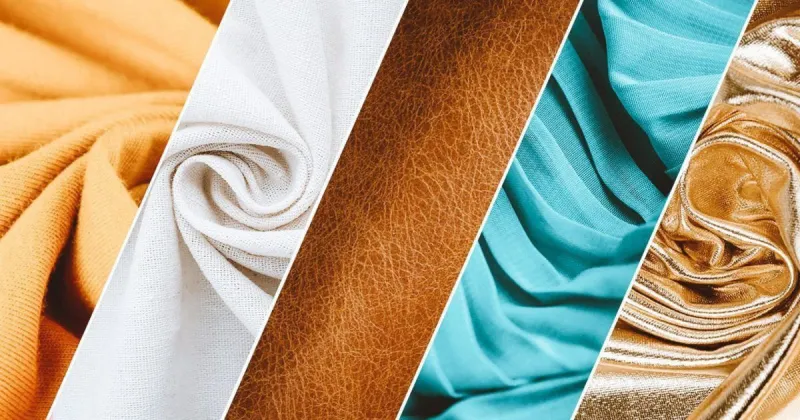
If there is a single aesthetic signature that distinguishes the fashion photographer's personal wardrobe from the average professional wardrobe, it is an unusually sophisticated relationship with texture. Where a trend-driven wardrobe might deploy color or silhouette as its primary expressive tool, the photographer's wardrobe tends to work through material contrast: a smooth technical fabric paired with a rough-woven linen layer; a fine-gauge merino knit worn over a heavy cotton twill trouser; a polished leather accessory grounding an otherwise matte, textural outfit.
This preference is almost certainly professional in origin. Photographers understand, viscerally, that texture is what reads on camera—what creates visual depth, interest, and dimension in a two-dimensional image. Translated to the body, that understanding produces outfits that are interesting without being loud, and considered without being effortful.
For the design-conscious dresser seeking to apply this principle, the entry point is simple: when building an outfit from a neutral palette, prioritize material contrast over color contrast. Two pieces in the same tonal family will read as sophisticated when they differ significantly in texture; the same two pieces in an identical fabric will simply read as flat.
The Architecture of the Working Uniform
Beyond texture, the photographers who dress most compellingly tend to share a commitment to what might be called the working uniform—a small constellation of pieces that repeat, in slight variation, across nearly every appearance. This is not the capsule wardrobe of editorial fantasy, ten pieces rotating through thirty outfits. It is something more specific: a set of shapes and materials so well-chosen that they require no active curation. The getting-dressed decision has already been made, at the point of acquisition.
This approach carries a practical wisdom that extends well beyond the fashion industry. When the foundational pieces of a wardrobe are genuinely excellent—well-constructed, correctly proportioned, made from materials that improve with wear—the cognitive overhead of dressing disappears. The photographer arriving on set at six in the morning does not need to think about what they are wearing. That freedom is not accidental. It is the product of deliberate, sometimes expensive, and always considered acquisition.
What the Lens Teaches the Wearer
The most transferable lesson from the fashion photographer's wardrobe is not a specific garment or a particular brand. It is a methodology: the practice of looking at clothing the way a photographer looks at a subject—with a professional eye trained to distinguish between what is genuinely compelling and what is merely current.
That distinction is the foundation of every wardrobe worth building. Genuinely compelling pieces share certain characteristics regardless of the season in which they were produced: a proportion that flatters without distorting, a material that ages rather than deteriorates, a construction that holds its shape through repeated wear. Current pieces, by contrast, derive their appeal almost entirely from context—from the particular moment in which they appear.
The photographer's wardrobe is, in this sense, a kind of applied criticism. It represents the conclusions of someone who has spent years asking, professionally and rigorously, what actually works—and has had the discipline to apply those conclusions to themselves.
Dressing With a Photographer's Discipline
For the Studio Styles reader seeking to incorporate this philosophy into their own approach, the practice begins not in the closet but in the eye. Before acquiring any new piece, it is worth asking the question a photographer might ask of a subject: does this work in five years? Does it work in ten? Does its appeal depend on the present moment, or does it carry something more durable—a quality of construction, a clarity of line, a material interest that will continue to reward attention long after the trend cycle has moved on?
The answers, applied consistently over time, produce a wardrobe with the same quiet authority that distinguishes the best photographers from those who merely document fashion. The difference, in both cases, is the same: not what you see, but how carefully you have learned to look.