The Multiplication Principle: Why a Truly Minimal Wardrobe Demands Thoughtful Repetition

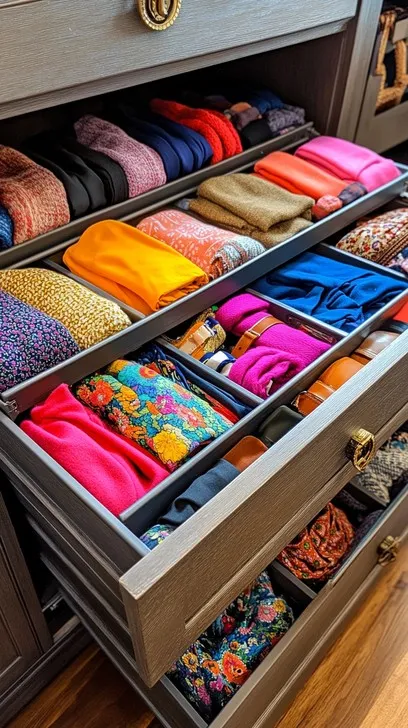
Photo: minimalist wardrobe organized closet neutral tones folded basics, via www.letemsvetemapplem.eu
There is a particular kind of frustration that arrives when a carefully edited wardrobe fails in practice. The white button-down earmarked for a Tuesday presentation is at the dry cleaner. The tailored trousers that anchor every considered outfit are too formal for a Saturday errand run. The single pair of dark-wash jeans, worn three times in a week, begin to look exactly that way. A wardrobe that appears minimal on paper can quietly become one of the most limiting environments a person inhabits.
The minimalist wardrobe ideal—born from capsule culture and elevated by a decade of decluttering content—has been interpreted, almost universally, as a numbers game. Thirty pieces. Ten pieces. The fewer, the more virtuous. But the professionals who build wardrobes for a living, from personal stylists to costume designers to the editors who populate the front rows of New York Fashion Week, understand a principle that the simplified version of minimalism tends to obscure: a wardrobe that truly functions requires not fewer categories, but thoughtful depth within each one.
The Paradox Beneath the Principle
Consider what a wardrobe is actually asked to do. It must perform across contexts—professional, social, athletic, domestic—and across conditions that are rarely predictable. A single white Oxford shirt cannot simultaneously be pressed and ready for a client meeting, comfortable enough for a weekend coffee run, and expendable enough to wear while helping a friend move apartments. The minimalist fantasy imagines one piece doing all three jobs. The practical reality demands at least three iterations of that piece, each calibrated to a different register of use.
This is not a failure of the minimalist philosophy. It is, in fact, its logical extension. True minimalism is not about owning the least possible; it is about owning nothing superfluous. When a second or third version of a foundational piece serves a distinct and necessary function, it is not redundancy—it is precision.
Stylists who work with high-performing clients—executives, public figures, professionals whose wardrobes are genuinely load-bearing—refer to this concept as functional layering within a category. Rather than diversifying across dozens of silhouettes, they deepen investment in the silhouettes that work, acquiring variations in fabric weight, color temperature, and condition-appropriateness.
What Strategic Repetition Actually Looks Like
In practice, strategic repetition operates across three primary axes: fabric, color, and condition.
Fabric variation within a silhouette is perhaps the most immediately practical. A well-cut crew-neck sweater in a fine merino wool reads as polished enough for a business-casual office environment. The same silhouette in a chunky cotton-linen blend belongs to a different register entirely—relaxed, weekend-appropriate, visually distinct despite the structural similarity. Owning both is not excess; it is range.
Color repetition is among the most misunderstood concepts in personal styling. Owning the same trouser in both charcoal and navy is not redundancy—it is the difference between a wardrobe that coordinates and one that actively expands. When two pieces share a silhouette but differ in tone, the number of viable outfit combinations increases exponentially. This is the mathematics beneath the mix-and-match wardrobe that stylists describe as effortless: the effort has simply been front-loaded into thoughtful acquisition.
Condition-based multiples may be the most pragmatic category of all, and the one most frequently overlooked. Every foundational garment in a working wardrobe exists on a spectrum from pristine to well-worn. A navy blazer fresh from the tailor carries a different authority than one that has traveled through four time zones and two client dinners. Acknowledging this reality—and building a wardrobe that accounts for it—is not a concession to impracticality. It is the mark of someone who takes dressing seriously.
The Designer's Approach to Depth Over Diversity
Interior designers speak frequently about the concept of restraint with intention—the idea that a well-designed room is not one stripped of objects, but one in which every object earns its presence. The same logic applies to the wardrobe. A closet that contains four variations of a single foundational silhouette, each serving a distinct purpose, is more considered than one containing forty pieces of varying relevance.
This approach also carries a significant advantage when it comes to getting dressed. Decision fatigue—the cognitive cost of choosing between too many dissimilar options—is a well-documented phenomenon, and it affects the wardrobe as much as any other domain of daily life. When the pieces within a category share a common language of silhouette and proportion, the act of dressing becomes less an exercise in problem-solving and more a matter of selecting the appropriate version for the day's context.
Building the Multiplied Wardrobe: A Framework
For those ready to move beyond the counting exercise and into the architecture of genuine functional minimalism, the following framework offers a starting point.
Identify your anchor silhouettes. These are the two or three shapes that appear most consistently in your most successful outfits. For many professionals, this includes a tailored trouser, a clean-lined knit, and a structured outer layer. These are the silhouettes worth multiplying.
Map your context spectrum. List the distinct environments your wardrobe must navigate in a given week—not just formal versus casual, but the specific registers of each. A morning workout, a creative agency environment, a client dinner, and a weekend market visit each demand something different, and your anchor silhouettes should be represented across that spectrum.
Acquire with variation in mind. When adding to an existing silhouette category, prioritize pieces that differ in fabric weight, color, or condition-readiness from what you already own. Avoid acquiring a third piece in a category where two already cover the necessary range.
Allow for the well-worn. One of the most liberating shifts in wardrobe thinking is the deliberate designation of pieces by condition. A shirt that has graduated from meeting-ready to weekend-appropriate is not a failure—it is a wardrobe that is aging gracefully and functioning fully.
The Quiet Confidence of a Wardrobe That Works
Minimalism, at its most compelling, is not an aesthetic—it is a commitment to intentionality. The minimalist wardrobe that truly delivers on its promise is not the one with the fewest hangers. It is the one in which every piece is present for a reason, and in which the reasons are varied enough to meet the full complexity of a life well-lived. Strategic repetition is not the enemy of simplicity. It is the mechanism by which simplicity becomes sustainable.