Thirty Pieces, Infinite Possibility: The Architect's Approach to a High-Performance Wardrobe
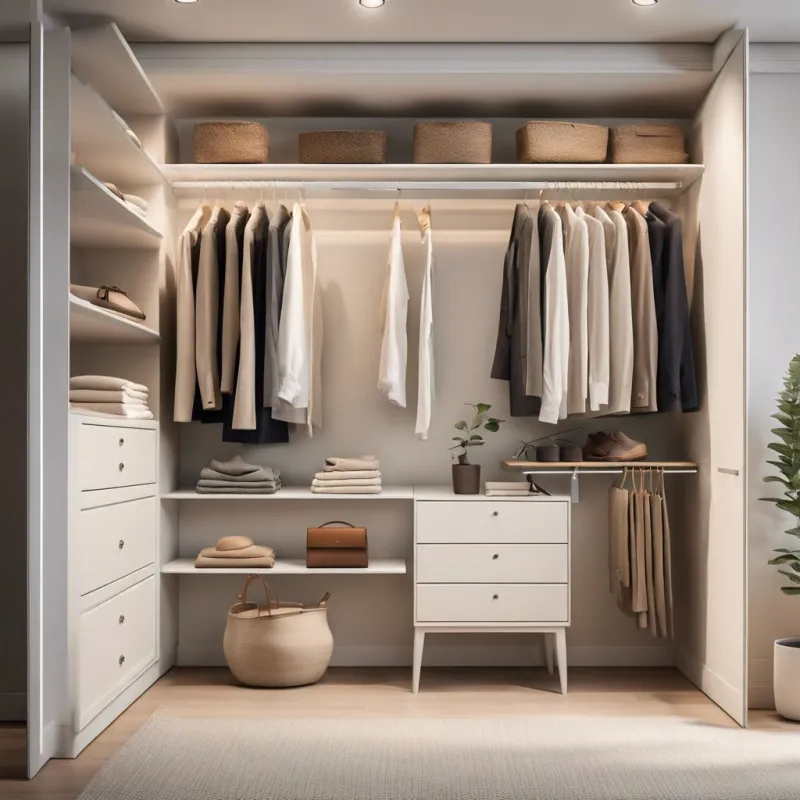
Photo: minimalist capsule wardrobe flat lay neutral clothing organized closet, via minimalismlifestyle.com
There is a particular kind of exhaustion that arrives not from having too little to wear, but from having too much. Closets crowded with impulse purchases, seasonal experiments, and aspirational items that never quite found their moment are among the most common sources of daily decision fatigue. The capsule wardrobe, at its most thoughtfully executed, is the antidote—not a restriction, but a liberation.
Think of it less as a minimalist exercise and more as an architectural one. The best buildings are not those with the most rooms; they are the ones in which every room serves a clear purpose and connects logically to the next. The same principle applies to a well-constructed thirty-piece wardrobe.
Redefining What "Working Harder" Means in a Wardrobe
Before selecting a single item, it is worth establishing what versatility actually demands of clothing. In the contemporary American lifestyle—where a single day might begin with a video call, transition into a client lunch, and conclude with dinner plans—garments are asked to perform across radically different contexts. A piece that functions in only one of those settings is, by definition, underperforming.
The benchmark for inclusion in a capsule wardrobe should be this: does this item combine with at least five other pieces I already own? If the answer is no, it does not belong—regardless of how beautiful it may be in isolation.
The Structural Breakdown: Where the Thirty Go
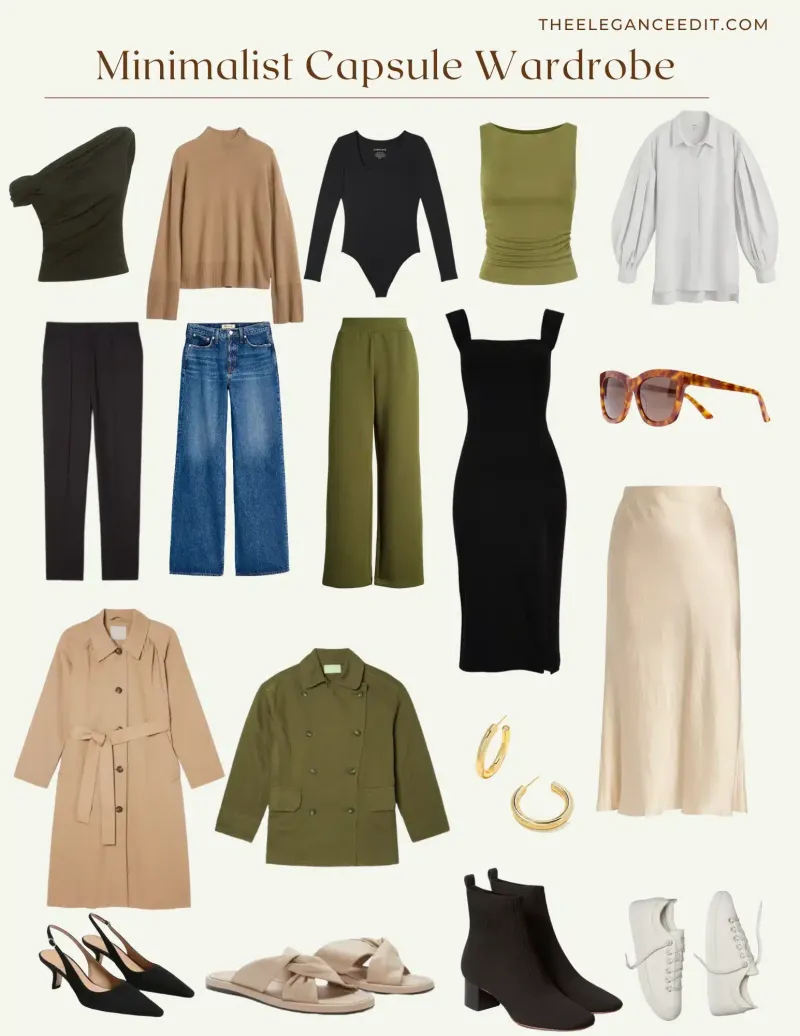
A high-functioning thirty-piece wardrobe is not assembled at random. It follows a deliberate ratio that prioritizes foundational pieces over statement items, while still leaving room for personality.
Tops: 10 pieces This category carries the heaviest combinatorial load. Allocate six pieces to true foundational tops—a white poplin shirt, a refined crewneck in a neutral, a fitted mock-neck, and similar workhorses. Reserve four slots for pieces with slightly more character: a subtle stripe, a textured knit, or a muted print that still reads as professional.
Bottoms: 8 pieces Four trousers or tailored pants, two denim options in different washes, and two skirts or shorts depending on climate and lifestyle. The key is that every bottom must pair with no fewer than six of your ten tops without visual conflict.
Outerwear and Layering: 5 pieces A structured blazer in a neutral does more work than almost any other garment in the wardrobe. Add a lightweight jacket, a drapey cardigan, a transitional coat, and one weather-specific outer layer appropriate to your region.
Footwear: 4 pairs This is the category most people over-invest in and, paradoxically, the one where strategic restraint pays the greatest dividends. A clean leather sneaker, a versatile low heel or loafer, a casual weekend option, and one elevated shoe for formal occasions will serve the majority of American lifestyle scenarios.
Accessories and Foundational Extras: 3 pieces A structured bag that transitions from professional to personal, a belt that grounds tailored looks, and one scarf or accessory that adds dimension without demanding a full outfit rebuild around it.
Quality Metrics: The Questions Worth Asking Before Purchase
The capsule wardrobe only functions if its components are durable enough to sustain repeated wear and frequent laundering. Before committing to any piece, a rigorous assessment is warranted.
Examine the fabric composition first. Natural fibers—wool, cotton, silk, linen—and high-quality blends tend to hold their structure and drape longer than synthetic alternatives. Run the fabric between your fingers: it should feel substantial without being stiff. Check seam allowances where possible; generous seams indicate a garment designed to be altered and maintained over time.
Next, consider the garment's construction at stress points: armholes, waistbands, and pocket seams. Reinforced stitching in these areas is a reliable indicator of intentional manufacturing. Finally, assess how the piece photographs—not for vanity's sake, but because a garment that looks polished in natural light will read as effortlessly elevated in virtually every real-world setting.
The Mix-and-Match Matrix: Making the Math Work
Thirty pieces, when strategically assembled, can generate well over one hundred distinct outfits. The arithmetic is straightforward: ten tops multiplied by eight bottoms yields eighty combinations before outerwear, footwear, or accessories enter the equation. Layer in five outerwear pieces and the number compounds significantly.
However, the math only holds if the color palette is disciplined. A capsule wardrobe operates best within a framework of three to four core neutrals—navy, camel, off-white, and charcoal are perennial performers in the American market—supplemented by one or two accent tones that appear across multiple pieces. When your accent color appears in a top, a scarf, and a shoe, it creates visual coherence that reads as intentional styling rather than coincidence.
WFH to Weekend: Contextual Dressing Within the Capsule
One of the most practical advantages of a well-built capsule is its ability to shift registers with minimal effort. Consider the following transitions:
A tailored trouser paired with a refined crewneck and loafers reads as polished video-call attire. Swap the loafer for a clean sneaker and add a drapey cardigan, and the same trouser becomes a relaxed Saturday errand look. Replace the crewneck with a crisp poplin shirt and the sneaker with a low heel, and the outfit is client-meeting ready.
These transitions require only one or two swaps—which is precisely the point. The capsule is not about wearing the same thing repeatedly; it is about engineering a wardrobe in which every combination feels considered.
The Discipline of the Edit
Building a capsule wardrobe is, in the end, an editing exercise. It requires the willingness to remove pieces that are merely liked in favor of retaining only those that are genuinely essential. This process is rarely completed in a single afternoon; most experienced stylists recommend a phased approach over several weeks, allowing for real-world testing of combinations before final decisions are made.
The wardrobe that results from this discipline is one that performs with the consistency of a well-designed studio: every element purposeful, every detail deliberate, and the whole far greater than the sum of its parts.