Less, But Better: The Art of Subtractive Styling for a More Intentional Wardrobe
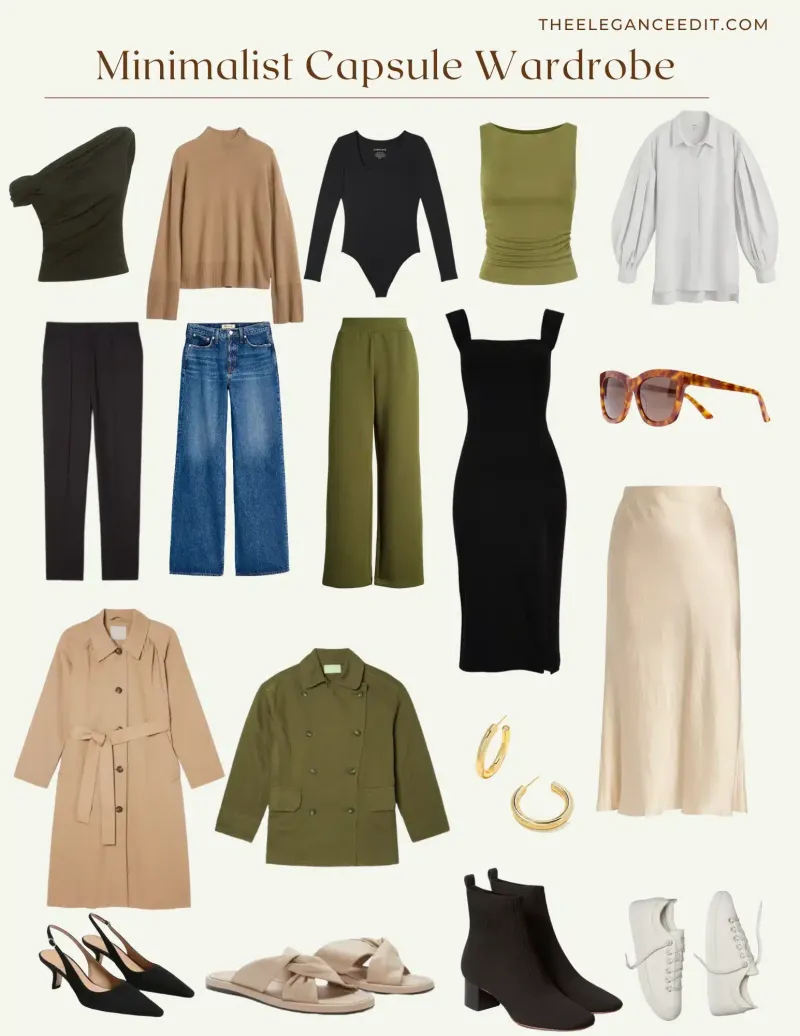
Photo: minimalist wardrobe organization neutral tones capsule closet, via theeleganceedit.com
There is a particular kind of confidence that comes not from a full closet, but from one that has been deliberately emptied. The racks are not bare — they are precise. Every piece earns its place. Every combination resolves with ease. This is the promise of subtractive styling: a design philosophy that treats removal as the highest form of creative decision-making.
For decades, the fashion industry has operated on an additive logic — more collections, more colorways, more accessories layered upon accessories. But a quieter counter-movement has been building among stylists, designers, and design-conscious individuals who recognize that restraint is not deprivation. It is discernment.
The Design Principle Behind the Edit
The concept of subtraction as a creative act is not new to the design world. Architects have long understood that negative space defines a room just as powerfully as the objects within it. Industrial designers speak of removing elements until the object can no longer be simplified without losing function. The German designer Dieter Rams, whose work influenced everything from Apple products to contemporary minimalist furniture, articulated it plainly: good design is as little design as possible.
Applied to personal style, this principle translates into a single guiding question: does this piece serve my aesthetic, or does it simply occupy space? The distinction matters enormously. A wardrobe assembled through addition tends to accumulate contradictions — impulse purchases that clash with considered staples, trend pieces that undermine a developing visual identity, accessories that compete rather than complement. The result is not abundance. It is noise.
Subtractive styling begins by silencing that noise.
Starting the Edit: What to Remove First
The most effective wardrobe audits do not begin with what to keep. They begin with what clearly does not belong. Stylists who work with private clients often describe a three-tier assessment process that can be adapted for personal use.
The first tier addresses fit. A garment that does not fit well — regardless of its brand, price point, or sentimental value — is a liability. Poor fit undermines proportion, disrupts silhouette, and introduces visual tension that no amount of accessorizing can resolve. These pieces exit first, without negotiation.
The second tier examines coherence. Each remaining item is evaluated against the broader aesthetic direction of the wardrobe. A collection of beautifully tailored neutrals, for instance, is weakened by the presence of a single garment that belongs to an entirely different visual vocabulary. Coherence is not uniformity — variety of texture, structure, and proportion is essential — but the overall wardrobe should feel as though it was assembled by the same sensibility.
The third tier, and often the most challenging, addresses aspiration versus reality. Many wardrobes contain pieces purchased for a version of the self that does not yet exist — or may never exist. The formal gown worn once, the structured blazer bought for a professional identity that shifted, the resort wear accumulated for vacations that rarely materialize. These aspirational pieces drain the wardrobe of coherence and the wearer of clarity. Releasing them is not defeat. It is honesty.
Constraints as Creative Catalysts
One of the more counterintuitive outcomes of rigorous editing is the expansion of creative possibility. When a wardrobe is reduced to its most considered elements, the combinations available between those pieces multiply in meaningful ways. Each item must work with several others. Proportions are thought through. Color relationships are intentional. The wardrobe becomes a system rather than a collection.
This mirrors a well-documented phenomenon in design practice: constraints breed creativity. A designer working within strict material or dimensional limitations is forced to innovate in ways that unlimited resources do not demand. The same logic applies to a capsule wardrobe. When you cannot rely on novelty to generate interest, you develop a more sophisticated command of silhouette, layering, and detail.
Stylists who advise clients through major life transitions — relocations, career changes, shifts in personal identity — frequently describe the edited wardrobe as a clarifying tool. When the extraneous is removed, what remains is a remarkably accurate portrait of who someone actually is, and who they are becoming.
The Quality Equation
Subtractive styling makes a compelling economic argument as well. A wardrobe of thirty carefully chosen, high-quality pieces will outlast, outperform, and outvalue a wardrobe of one hundred mediocre ones. This is not merely a financial observation — it is an aesthetic one. Quality garments hold their structure, their drape, and their relevance across seasons in ways that fast-fashion alternatives cannot.
The investment required for quality pieces is more manageable when the total number of pieces is deliberately reduced. Redirecting the budget typically spent on frequent, low-cost purchases toward fewer, more considered acquisitions is a practical strategy that aligns with the subtractive philosophy at every level.
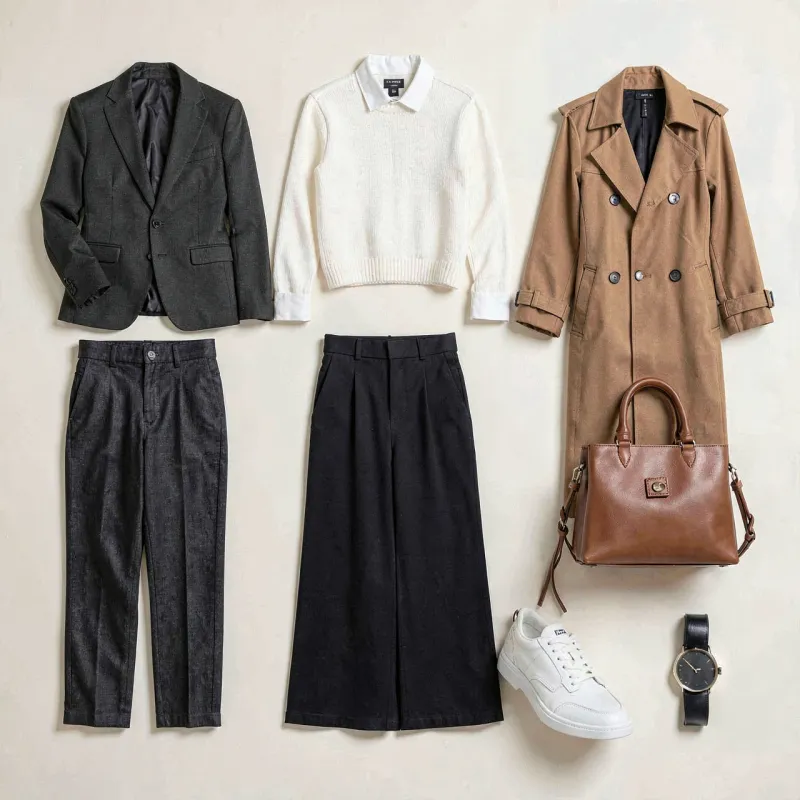
Natural fibers, considered construction, and timeless silhouettes are the markers most stylists point to when advising on quality. A well-cut wool trouser, a precisely tailored cotton Oxford shirt, a structured leather bag in a neutral tone — these are pieces that function as the architecture of a wardrobe, around which other elements are organized.
Sustaining the Edit
The edited wardrobe is not a one-time project. It is a practice. The discipline of subtractive styling requires ongoing maintenance — a periodic reassessment of what belongs, what no longer serves, and what the wardrobe as a whole communicates.
Seasonal transitions offer a natural rhythm for this review. Before introducing new pieces for fall or spring, the existing wardrobe is assessed with fresh eyes. What has worn well? What has been consistently bypassed? What gaps, if any, genuinely exist — not as aspirational additions, but as functional ones?
The answer to that last question is almost always fewer pieces than anticipated. Most wardrobe gaps are not absences of items. They are absences of clarity about what the wardrobe is meant to express. The edit, returned to regularly, sharpens that clarity over time.
The Aesthetic Argument for Less
Ultimately, subtractive styling is an argument for meaning over volume. A wardrobe that has been rigorously edited communicates something deliberate about its owner — a willingness to commit to a point of view, to resist the noise of trend cycles, and to invest in the kind of quiet confidence that comes from knowing exactly who you are and dressing accordingly.
In a cultural moment defined by excess and acceleration, there is something genuinely radical about choosing less. Not as an act of deprivation, but as an act of design. The most elevated personal styles are rarely the most crowded ones. They are the ones that have had the courage to subtract — and the discernment to know what to keep.